Have I ever mentioned that I really like Ed’s character? It’s great how he develops because early on he can be really selfish and only concerned with his own goals. See the Marcoh encounter:
So Marcoh opens up to the two brothers about the Philosopher’s stone and how it was used in Ishval. He emphasises that it was a massacre that he feels responsible for.
Ed’s response?
He’s not interested in hearing about Marcoh’s guilt or the war or anything. He’s just after the stone. (Also Marcoh deserted the military, Ed. He doesn’t care about your cool title.) At least Al’s being more sympathetic, giving some encouraging news about the situation in Xenotime.
Ed meanwhile, breaks down a wall and finds the incomplete Philosopher’s stone. Basque Grand then comes in and confirms that the stone was used in Ishval to augment their abilities, allowing them to cause far greater destruction.
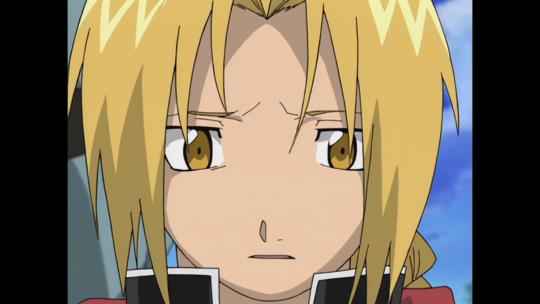
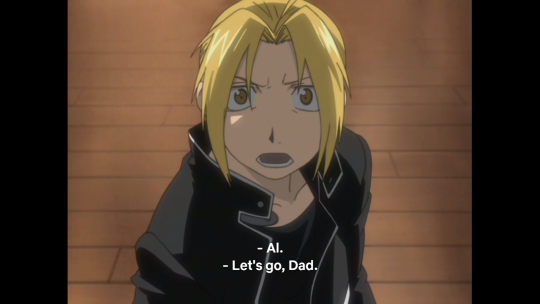
Ed?
…That’s one of his stranger expressions. A still picture doesn’t really do it justice as you can’t see how his eyes are twinkling. Ed’s very excited to be getting some answers and he’s ignoring all the warning signs. Because this is the biggest break he’s had in almost 4 years of searching for the stone. Wars aren’t anything to do with him; he’s only here for the stone and they’re finally getting closer to it.
It’s pretty Ironic that instead of a flashback of Ishval while Marcoh’s talking, we get shots of the destruction in Liore – something that’s very much to do with him despite his ignorance.
A moment later, he does finally show some anger.
…But it’s because of Grand denying him access to Marcoh’s research about the stone. (Because no one cares about Ed’s cool State Alchemist title.)
Then Grand sends in soldiers to arrest Dr. Marcoh and it’s finally apparent that Ed’s actions have unwittingly caused him harm – his actions do have consequences outside himself. By going here, he’s tipped the military off about Marcoh’s location.
And Ed finally shows some guilt and empathy. This time, he’s angry at himself. We even get a flashback to Nina and Ed’s inability to save her from the military’s clutches. He’s afraid he’s making another mistake.
He runs after the car, trying to make things right.
Exactly how far he would’ve gone to save Dr. Marcoh we sadly don’t find out as that’s when Scar appears and suddenly they all have a different problem.
Hohenheim is one of the odder characters in FMA 03. It is perhaps one of the clearest symptoms of how the series overtook the manga as Hohenheim’s story in that isn’t covered until much later. Therefore he’s set up to be important but he’s also not meant to be much more than a minor character.
In the manga, I believe Father’s existence was beginning to be revealed (I haven’t actually read much of it, I confess) and it’s not clear at first that he is a distinct character from Hohenheim- the reader is supposed to think it’s Ed and Al’s father. (He looks just like him, you’re not going to assume its his identical twin.) So, it seems Hohenheim is supposed to be both Ed and Al’s father who their mother clearly loved and also a monstrous person who controls the Homunculi and has some sort of evil plot that involves wars and conflict.
03 Hohenheim is an interesting attempt at this I think, as he has clearly done terrible things in the past but he’s not actually the antagonist. Everything we see of him shows someone who’s trying to be a better person or at least move on from his dark past. He doesn’t make any excuses or apologies for his past (avoids talking about it entirely actually) and doesn’t expect anything from Ed or Al either.
Towards the end, Ed does believe it might be his father behind the Homunculi, until he actually meets Dante at the end. I kinda wish this had been emphasised a little more. The ending is a little rushed sadly.
Hohenheim doesn’t actually do much in the series. He confronts Dante, trying to get her to listen to reason and offers Ed some answers and support in the other world. That’s basically it. His past is incredibly interesting though and works as something of a potential dark path for Ed if he had allowed himself to forget his morals and didn’t have his brother’s influence.
(I intended this to be a quick post but now I’ve mentioned Ed…)
Hohenheim created a Philosopher’s stone, sacrificing other lives to do it just as Ed was tempted to do in Lab 5. He also created a Homunculus, just as Ed and Al did, a failed human transmutation that went badly. In fact, Ed and Al learn how to make one by following his notes. Where Ed eventually has the courage to face his creation and fix his mistakes, Hohenheim has been running from his mistakes for a long time. He never even meets Envy (except in CoS). In the series proper, we finally see him facing Dante but it’s far too little too late.
This change of heart probably comes from falling in love with Trisha. Of course, even with Trisha he’s too afraid to reveal his secrets and chooses to leave rather than reveal the way his current body is beginning to rot. Ed has also had a tendency to run from his mistakes and hide what troubles him. The prime example would be how he wanted to ask Al for years if Al blamed him for the human transmutation and doesn’t find the courage until episode 24, after their fight and with some support and encouragement from Winry. But Ed does get better at opening up and facing his problems. When Al tells Hohenheim how he lost his body, Hohenheim’s talks of taking someone else’s body. Al hates this idea though – he and Ed just want to regain what they’ve lost.
In the last episode, Ed seems to hold no anger towards his father, nor does he try to avoid him but he actually opens up to him about some of his worries and it’s a mark of how much he’s grown. For all that it’s said that FMA 03 is a kind of dark story, Ed avoided the dark path. Hohenheim was able to change too even after everything he’d done in his past (his change came as a result of meeting Trisha and falling in love).
I feel like every character, villain or otherwise, is given a chance to change and do the right thing in FMA. (What is right is subjective but they can at least turn away from their past evil acts.) No matter how awful their crimes are. Not everyone takes this chance but it’s there.
Hey, here’s just another one of these episode analysis things I’m apparently addicted to. This one was kind of giving me trouble. Maybe because it’s already very good at getting its points across? Oh well.
This is another episode that explores the Elrics backstory. So yeah, more talking about Ed and Al’s characters. It’s a pretty brutal experience, honestly, and demonstrates that Izumi is a wise teacher (but would probably make a terrible mother given these harsh methods.)
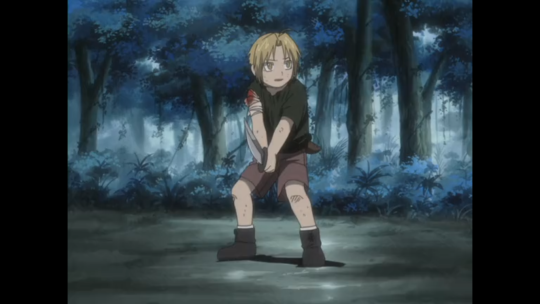
Whatever the case, the Elrics are left alone on an uninhabited island. They have to work out what Teacher means by “One is all, all is one.” She means for them to learn about the flow of life.
At first, Ed and Al pretty arrogant and energetic, determined to beat this puzzle and overcome the challenge. But over the course of the episode we see their focus narrow to just trying to survive. They soon no longer care about winning. All their lofty goals are irrelevant to their present situation.
They’re instead learning to do what is necessary to survive.
Early on, they catch a rabbit in a trap. But then they realise they have to kill it to eat it and neither of them have the nerve to do so despite their growing hunger. Then a fox steals their rabbit to feed its young. It gives Ed an awful bite. Ed’s furious but then his expression softens as he realises that the fox mother is caring for its two children.
Meanwhile, they’ve also got to contend with the masked man. It’s Mason in disguise but they don’t know that. He repeatedly attacks them, steals their food and make survival generally harder. They learn to tread carefully and stay alert.
And after about two weeks they’re questioning what they’re even doing here. They barely remember that there’s a greater reason for being here. They’re eating anything they can find, including rats, snakes and poisonous mushrooms.
Ed seems to become particularly depressed. Al is frustrated and desperate as well of course, but he’s always just a touch more optimistic. Though he does at one point confess how much he just wants to go back home. And in that moment where Ed asks why they’re here, Al doesn’t have an answer either. So Al’s not doing all that much better.
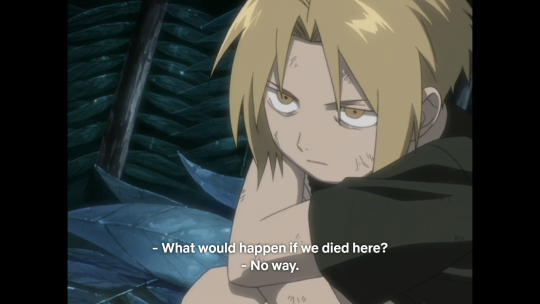
But Ed’s state of mind is a bit worse. See this, where Ed’s grimly thinking about death with really deadened eyes:
This is all leading up to this moment where the two of them are fighting the masked man. Ed takes a blow to the stomach and lies on the ground. His brother is still fighting and can be heard taking hits and Ed doesn’t even move out of concern for him – it’s like he’s given up. His eyes have this dead look to them.
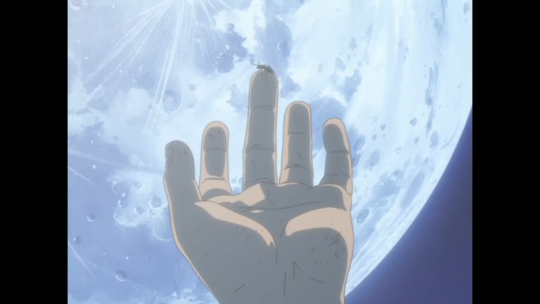
That’s when Ed sees this dead cicada and even tinier microorganisms harvesting the little insect’s corpse. That when he comes to the realisation that it’s death is enabling other things to live, that life works in this flow. The natural flow of the world is this cycle of life and death. And he applies this idea to himself and his own situation.
(There’s also this very brief image of his mother appearing once more in his thoughts.)
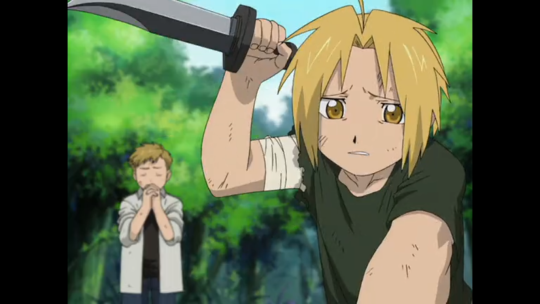
With newfound determination, Ed picks up his knife and faces the masked man. The message is clear: he’s willing to fight with lethal force to protect his brother. With that, the masked man simply drops Alphonse and finally leaves them alone. He doesn’t bother them again. (And Ed finally gives a brief relieved smile.)
So Ed’s starting to get what Izumi meant by All is one, one is all. With this understanding comes a greater appreciation for the value of life and a understanding of the world as a whole.
As he explains his thoughts to Al, there’s loads of beautiful imagery of wildlife. Actually, this whole episode has lots of nice visuals, I think. Ed talks about death again, this time far less depressed about it. He says that in their subjective mindset, people will be sad and they won’t have achieved anything but looking at their lives as part of a bigger picture, the world would just keep on going as if nothing had happened while their bodies would decompose into their base elements. (Al lists the elements that make up a human body here.)
They realise that they’re only tiny individuals in a greater world where their elements that make them up will keep on circulating through the system long after they’re dead. But without all the individual parts that make it up, the ‘All’ couldn’t exist.
This time, when faced with a rabbit, Ed’s able to kill it. (Foreshadowing how Ed could be pushed to taking a life as the Greed arc is coming up).
And they link it to alchemy. Alchemists like them work by recognising that flow of the world and working within it – to understand, decompose and recreate.
And that pretty much concludes the flashback portion of this episode. Izumi’s impressed with what they’ve learned and agrees to teach them.
In the present, Ed confesses that while they’d learned that much, they hadn’t accepted that life can only flow in one direction. That death is irreversible. They understand it better now as he says how it was a mistake to try and bring their mum back. Coming back here was to give them a chance to reflect on that.
Despite confessing that much, they both stay firm in their choice to continue seeking a way to fix themselves even it means potentially making the same mistakes. This time, they’re far more aware of the costs and dangers.
The storytelling in this episode is pretty nice. It does a bunch of cuts between the past and the present which isn’t something I want all the time but it works here. Seeing how capable the Elric brother are shows how much they’ve grown and changed from when they were kids. It also prevents the episode from being too dark as you get to see the two of them laughing and fondly reminiscing about their terrifying experience on the island as kids.
(This is also the episode which introduces Wrath. He’s observing them as they wander about. Al even somehow mistakes him for Ed at one point. He doesn’t reveal himself until the end, giving a hook for the next episode.)
So yeah, all in all, one of my favourite episodes. Just wanted to talk mostly about the development of young Ed and Al throughout this episode though I feel like I just ended up summarising the story. Oh well.
Hey there! Alphonse is one of my favourite characters in FMA. He’s nice and as much a prodigy as his brother – but when it comes to people, he can be really naive and idiotic. (Bear in mind that he is really a kid though.)
This is mostly about 03 Alphonse where his trusting nature is both a strength and a flaw. He’s trusting in BH as well, I think, but I don’t think we see him get into as much trouble because of it. (I mean, there was that time when he spent all night in the dark with Pride, who was banging his helmet in a constant methodical pattern the whole time before realising something was wrong.)
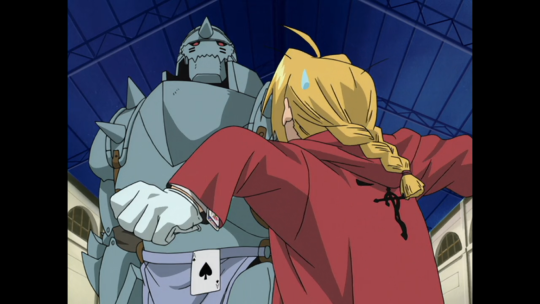
Want some examples? Okay! At the start of episode 10, Ed and Al are playing poker and Ed is blatantly cheating. Al doesn’t suspect his devious brother at all until the cards literally fall out of his sleeve.
Apparently he just thought he was being unlucky.
Later in this episode, even though Clara/Psyren has already lied to them once, he still believes she has good intentions for stealing stuff. He believes her made-up story every single time. Ed only believes her the first time.
Yeah, he’s irritated at his brother for helping to arrest her. (Gosh, Ed spends so much of that episode eating.)
An episode later, the brother are in Xenotime and Ed is angry that a pair of brothers have stolen their identities and as a result the entire town thinks they’re a pair of liars and threw them out of what was probably the inn.
Unsurprisingly, Ed is angry. Al, meanwhile, doesn’t hold any sort of grudge at all and tries to be nice and befriend the younger brother, Fletcher, while calling his brother a hothead. (Like Ed’s reaction is the unreasonable one or something.) This works out for Al as the Tringham’s are not really a bad sort and they start working together. Al also convinces Fletcher to stand up to his brother.
Moving away from the early fillerish episodes, how about that time when Al meets Scar? Scar has already tried to kill he and his brother once. Al’s armour was completely wrecked. But when he meets up with Scar outside the fifth Lab, he is nice and attempts to befriend Scar, asking about his past and such. Nevermind that Scar has told him that he still intends to kill Ed.
Well, I guess Scar did help to defeat his opponent that Al was struggling against-
Oh right. Al also listens to Barry the Chopper and allows the crazed serial killer to convince him that he might not be real. That all his memories are fake. He gets caught up in his emotions and stops listening to logic and this leads to a terrible fallout with his brother. Helping Scar paid off at least as he helps him fight some mercenaries and Scar decides to help and defend the other Ishvalans, ending his crusade against State Alchemists.
Al’s awesome trusting nature also helps him to befriend Marta, as he helps to keep her safe even against her wishes when she and Greed have kidnapped him.
This pays off later when he meets up with Marta again and she gives them a ride.
Though it’s not all so good as he also tries to stop Marta from killing Kimblee because he doesn’t want her to take revenge for betraying Greed. His efforts aren’t enough to save her this time though as she can’t resist trying to kill the Fuhrer and Marta ends up dead.
As for Kimblee? He turns Alphonse into a bomb and Scar has to give up his arm to save Al’s life. (Kimblee is killed by Scar)
Next, the brothers run into Hohenheim and Ed wants nothing to do with him while Al isn’t angry at his father for abandoning them at all. He even sides against Edward. Ed seems incredibly hurt by this.
Gosh, couldn’t Al have pretended to be irritated for five minutes to support Ed before forgiving his dad? Ed’s feelings are hardly unreasonable. Anyway, this means he can spend the night with his dad and get to know him a little.
Then Al gets a call from Shou Tucker of all people and decides to learn about the Philosopher’s stone from him. He goes behind Ed’s back to do this. Al is somehow surprised when this backfires as Tucker uses him and a piece of his Philosophers stone.
Finally, there’s Al’s reaction to Sloth. Ed is not inclined to trust her as he realises she’s not their mother and means them harm. He tells Al as much. Al still wants to trust her though.
He even throws her weakness away and shoves Ed to the ground. Sloth proceeds to manipulate and control Al (she literally hides inside his body) while trying to kill Ed.
Yeah, so in almost every one of these instances, Al ends up fighting or arguing with his brother. Only some of the time does this work out for them. There’s actually only one incident I can think of where Al isn’t incredibly naive and trusting. And that’s against Wrath. This is probably one of the times where it might have been good if Alphonse had been less aggressive as Wrath isn’t actually a bad sort. Edward was already being sufficiently wary and untrusting towards Wrath. The two of them end up handling the situation really badly given its Envy of all people that acts kind and earns Wrath’s trust. It’s because he has Ed’s limbs – that’s like the one thing Al can’t accept because he feels guilty about it.
The Elrics actually complement each other really well. Al’s trusting nature gets people to open up towards them while Ed is more rational. Ed, for instance, realises something is off about Tucker long before Al, who only understands what Tucker’s done to Nina when it’s revealed. Al’s basically the naive, trusting brother while Ed is the one who has to be responsible. Err, Ed can be pretty reckless and emotional as well, it’s just that he’s more cynical and less prone to trusting killers and liars.
Hey, this is just a post I wrote about defining what Canon is. Why? I don’t know, I guess I just wanted to ramble.
So when you’re talking about a specific fandom based around some sort of fictional story it is useful to keep in mind what is actually canon and what is not.
Canon means anything in the source material, anything official as opposed to fan-created stuff. Err, I wish it were that simple but not all official stuff will be counted as canon. And in certain fandoms you get multiple writers and their ideas can conflict and it can be a little confusing.
(I believe the term of Canon was originally used relating to Christianity as the Church had to decide which books were part of the Canon bible. Various books in the bible were written by different sources and it was all written millennia ago so it’s hard to decide on when certain things were actually produced and how useful or reliable they are. Deciding what counted as Bible Canon was quite a complex task, I’m sure. I’m just going to focus on fictional universes for this post though.)
So, how do you decide on what is canon? My approach is to find the stuff that is most canon first and go on from there. I’m going to use Harry Potter as an example as it’s a fairly straightforward one.
– The seven Harry Potter Books are all canon. They’re all written by J.K Rowling and they tell a complete story.
– Also canon but a level down from them would be some of the other stuff Rowling has written set in the Harry Potter Universe. These provide some extra world building.
– These are: Fantastic Beasts and where to find them, Quidditch through the ages, and the Tales of Beedle the Bard (the fairytales are meant to be fictional in the Harry Potter universe so what’s canon is that these are examples of wizard fairytales not events that actually occurred in-universe.)
– The next level down is the Fantastic Beasts movies. They’re consistent with events in the Harry Potter novels but taking place in the past and set in the US.
What about the Harry Potter movies? Their storyline is a retelling of the books so I would rate them as based on canon but not really a source of canon themselves where the books are my top-level canon.
– So another level down and you get stuff like Pottermore if you want to use it as canon. It’s a site where the information comes from Rowling and provides extra detail about the Harry Potter world. If you want, you can also consider other stuff Rowling has said about the Harry Potter world to be canon. That’s up to the person though. It’s not nearly as good a source for canon as the Harry Potter books.
– There’s also the play the Cursed Child which was not written by Rowling herself. It’s set in the future and if you want to consider it canon you can. We’re firmly in a grey area of canon-ness.
What if one bit of information contradicts another? My method is that the main books are top-level canon. If other canon sources contradict the books then the books would take precedence. And if the books contradict themselves? Latest one published takes precedence. So Deathly Hallows then Half-blood prince etc. Reason for this is because facts established early on may be unreliable. The first book had comments about werewolves living in the forest. Book 3 would establish that Werewolves only turn on a full moon. Obviously book 3 rules take precedence and the stuff in book 1 is just early weirdness before the world had been more fleshed out.
With most fandoms, you can generally follow the same rules to establish canon. Main work is canon. Latest stuff in main work is canon over earlier stuff. Any supplementary official stuff can be considered canon if it doesn’t contradict main canon.
How about stories with multiple reboots and different plotlines (like comic books)? In that case, it is not a single canon story but multiple stories each with their own separate canon. Every version of the characters/plot can be considered correct in their own canon. (However, if a work is meant to be consistent with another then it’s part of the same canon.)
I’ll use Fullmetal Alchemist as an example here as I’m very familiar with it. There’s a manga and two anime adaptations. The first, the 2003 adaptation deliberately diverges from the manga storyline so it’s in its own separate canon that is not consistent with the manga but is internally consistent (mostly, all works develop plot holes). It’s sequel movie, Conqueror of Shamballa, is part of its canon as well, (though it can be considered supplementary material.)
The second anime adaptation, Brotherhood, is a retelling of the manga as it largely follows its plotline and characterisation (with some minor changes that are inevitable when adapting.) In that case, the Manga is still canon. (Though if you prefer the changes Brotherhood makes, you can consider it ‘your canon’ with the manga fleshing it out with extra detail). The movie Sacred Star of Milos is also made to be consistent with Manga canon (though it’s also supplementary). There was also some Light Novels created to fit into Fullmetal alchemist canon which the manga writer, Arakawa, didn’t write, consider them canon if you want (some will not).
How about extra omakes and OVAs? Some of these are explicitly non-canon joke chapters. If they’re canon-consistent then you can consider them canon if you want, again on a lesser level to main canon. FMA also gives you the live-action adaptation. It’s another interpretation of manga canon with quite a few differences. You can consider it to be its own separate Live-action canon if you want, I guess?
–
So where do fan-theories and ‘headcanon’s fit in? They’re firmly not canon. They may be canon-consistent but they are not actually canon unless acknowledged as canon by an official source. You can consider your ideas canon in your own mind, for the purposes of your interpretation of canon if you want, of course (hence the term headcanon).
So, what you consider canon can quickly become open to interpretation. It’s totally cool to do so. Other people may have different ideas and these aren’t actually wrong either. People do get canon facts wrong too of course and you can correct them (politely). If someone’s making an AU (alternate universe) story then they’re not trying to follow canon instead exploring fun alternative possibilities. Fanfiction isn’t canon of course, and it’s not trying to be.
A lot of stuff may not have answer in canon and you’ll get some consensus in a fandom for it – it’s still not canon but it’s probably canon-consistent and you may like it enough to put it into your own interpretation. Sometimes canon is really stupid and dismissing it may be sensible.
Envy is now a character I really like in FMA. The first time watching the show though, he didn’t really make that big an impression because he honestly feels like a pretty minor character. (Everyone does apart from Ed, Al, Roy, Lust and Scar and maybe Wrath and Izumi).
In the lab 5 arc, Lust is very clearly in charge and Envy’s contribution didn’t stick out much to me. While he was behind Hughes’ murder, Sloth’s role as the one he specifically interrogated and then seemingly arranged for him to die when it was clear he knew too much stuck out more to me than Envy. So yeah, Envy was just another homunculus essentially.
But then one scene came along to change my mind.
Envy’s final scene.
Before this scene, Envy was essentially a thug who enjoyed causing pain and misery. Dangerous and clever, I guess, but nothing too interesting.
Then this scene put him into a whole different light. He’s in front of the gate and Edward tells him that Hohenheim is somewhere on the other side. Without hesitating, he marches straight through the gate. Nothing else matters to him.
Envy is someone nursing a grudge and lives for revenge. He’s basically walking to his death here and yet he does it with a smile. This isn’t some pitiful end, one which a villain like him probably deserves. It’s an end he chooses purely for his own reasons.
Even wrapped up in those creature’s clutches, he seems utterly confident that this is the right course of action. The only time his smile fades in the scene is to order those creatures to do what he wants. Ed warned him against this action but despite how foolish it was, there is no trace of regret – Envy is committed.
The gate closes before a watching Edward.
He’s watched Envy’s end in silence. But one last glimpse of his face shows him starting to cry. Soon enough, he will wake up in a new body and wonder why he’s crying. Is it for the brother he’s just lost? Or perhaps, for the brother he never knew?
Needless to say, I love this scene. It made me view Envy in a whole different way. His hatred stemming from his abandonment issues. His hatred of Edward in particular. His enjoyment in destroying happy families like the Hughes. And Envy is so old -400 years old- meaning he’s had this terrible bitterness growing inside him all that time.
Envy is still a terrible person but you start to see why he is like that. Dante’s been manipulating him for so long but she’s also the closest thing he has to a family. The other homunculi are also like family to him because they’ve also been abandoned by their creators. Is it any wonder he would get along so well with Sloth, created and abandoned by the Elrics when she didn’t come out right? Or Wrath, damned before he had a chance to live?
Edward’s state in this scene is also interesting as he’s so very calm, in stark contrast to Envy’s rage. Envy’s the one who just killed him but he doesn’t show any anger. He just lets Envy walk to his own doom with a softly spoken warning.
Envy is very different to Edward ultimately but Envy is perhaps what Edward could have been. If he hadn’t had his loving brother and had let himself become consumed with hate, he might have recklessly thrown his life away too.
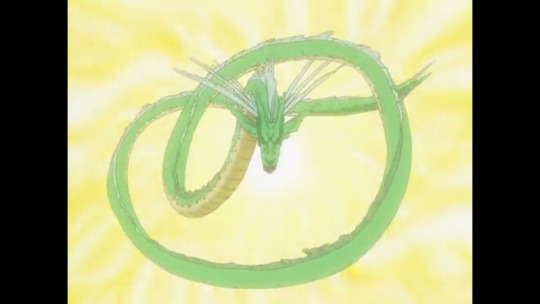
(Okay the dragon form is still really random.) I don’t really like CoS much, and one of the many reasons is that I really like the idea of this scene as Envy’s final scene. I prefer never knwoing what became of him.
Hey, I haven’t looked in depth at an FMA 03 episode in a while. So, in this post I’ll be talking about Episode 23, Fullmetal Heart – or Heart of Steel if you prefer. (In Japanese, a more literal translation of Edward’s title would be something like ‘Steel Alchemist’ apparently).
This episode is a gem. (It’s comedy moments even work.) It takes place immediately after the Lab 5 incident and deals with the aftermath. If I had to pick some sort of theme for this episode, it’d be something like Consequences and Responsibility and Opening Up. It’s also sort of a breather after the rather dark and intense Lab 5 arc.
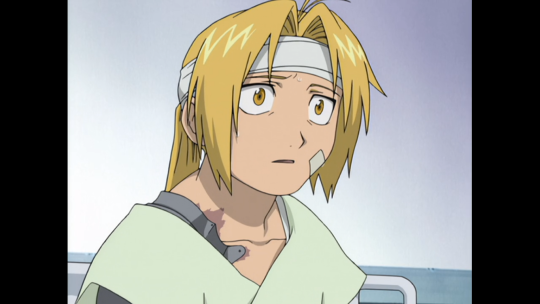
The first shots capture this episode well. Ed wakes up, safe in a hospital. Then he freaks out as he remembers Al. Then he is relieved when he notices Al is with him. Then his face falls as he looks at Al’s condition.
Al’s in a pretty bad state, all of his metal limbs were eaten by Gluttony and he’s completely immobile. And, if anything his emotional state is even worse. Al’s present for much of this episode and yet he hardly says anything, mostly he’s inside his own head and brooding.
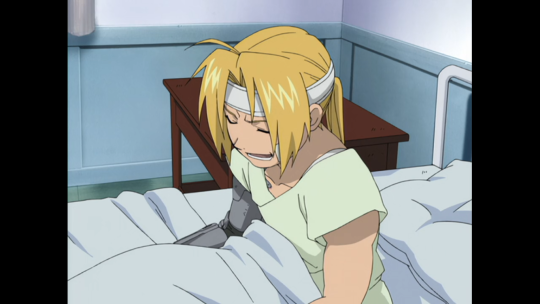
Ed’s pretty battered himself and he has to call Winry to request she come and fix his arm. Plus he’s stuck in his hospital bed for practically the entire episode, evidently drained by his experience. While I’ve always associated the episode name with Al’s feelings, I feel that Ed’s feelings actually get the most focus throughout this episode.
Maria and Denny ask about Lab 5 and Ed’s instinct is to brush them off. Really, brush the entire incident off and dismiss the consequences. He’s already casually talking about doing better next time. Maria Ross is not amused.
She slaps him on the face, telling him to take things seriously, that they were seriously injured and that they put themselves at risk. It’s a hard hit to shock him into listening. Maria risked her own life getting them out of Lab 5 and has been very diligent in her job to protect them. She asks Edward to try and start trusting adults (because she cares about them).
Edward gets a similar challenge from Hughes not much later. He’s been looking at all the damage from Lab 5 and now goes to see Ed and Al for some answers. Meanwhile, he’s hiding what’s happening from Roy, choosing not to inform him anything when Roy calls.
At first, Ed’s reluctant to say anything. Hughes waits patiently for him to choose to speak and open up to him. There’s quite a bit of silence as Ed decides whether he wants to trust Hughes with the information. But eventually, he shares the information about the Homunculi – that they’re after the stone and wanted him to make it.
Hughes thanks him for all the info and promises to look into it while the brothers recover and just take care of themselves. Ed’s shared the burden of that information so now he can focus on his own personal problems essentially. Ed gives a fake smile at that, looking over to Al.
He hasn’t addressed it yet, but it’s obvious that Al’s not being himself. He’s only given one-word responses any time someone (Ed) directly addresses him and otherwise has been silent. Ed’s not sure what’s wrong but it’s clear that something is bothering Al.
Now, Winry arrives and she’s feeling a little guilty herself. She wasn’t careful enough with her maintenance (probably because she built the arm in three days) and forgot an important component and it got Ed into trouble. It’s treated mostly light-hearted but Winry’s clearly upset with herself and it ties into that theme of consequences nicely. That said, Winry’s presence is good for Ed.
He’s happy to see her and immediately tries to cheer her up when she’s upset and worried for him. She soon realises that things are tense between Ed and Al and immediately asks what’s wrong. She’s upset that they don’t open up, feeling that they’re keeping her at arms length.
Hughes finds her and offers some comfort. He explains that they do respect her and that they’re not good at opening up because they don’t want to burden anyone else with their problems. It’s a good summary of this episode’s them. Ed and Al sitting in silence with their misconceptions rather than talking is an excellent example of their difficulties in communicating even with each other.
Hughes tells her that they do care for her and trust her. If she’s patient with them and is there for them then they’ll open up when it’s important. (And it’s really nice that he just invited her to his beloved daughter’s birthday party. Hughes is awesome. Yes, it’s here to make you sadder in a couple episodes.)
So, Winry returns to Ed and she doesn’t push him. Instead she give him a cake from Gracia and they start talking fondly of childhood memories. Al asks to leave the room so he can brood alone and as Winry works on Ed’s arm, he opens up to her about what’s bothering him.
He reveals that he’s scared that Al blames him for not making the stone. (And by extension for Al being stuck in the armoured body at all.) Winry consoles him, that Al wouldn’t want him to take another’s life. She suggests that Ed just offers an apology to him and try to mend things rather than letting things stay this tense.
Ed seems nervous and conflicted but agrees and offering an apology is the very next thing Ed does.
(It’s also the first time Ed actually stands up this episode.)
Well, in response, Al also opens up. Hooray! Except, it’s that he thinks he’s a fake and that Ed doesn’t really love him. (Is this what happens when he broods in silence for too long?)
So, Al demands some answers from Ed and he’s struggling on what to say again. Al’s also ignoring Winry and is irrational and angry. While Ed is scared to confess what’s truly, truly been bothering him for years (whether Al blames him for the human transmuation and being stuck in unfeeling armour), he’s trying to show through his actions that he cares.
For his trouble, he gets hit in the face (the second time this episode!) and Al runs away. Eh, well some things can’t be brushed off quickly. Al needs time to deal with his feelings and Ed will properly reveal his worries next episode.
So, yeah, a whole lot of consequences from Lab 5 and lots of opening up from Edward. 03 seems so good when you put Ed at the centre of of everything. I love the way he’s explored here and seeing the various interactions between him and Winry, Maria, Hughes and his brother. It’s also his birthday which means he’s growing up (emotionally maturing, I mean).
This is a part of a reply I wrote in response to drrockbell on Tumblr. I ended up talking about Winry’s dependence on Ed a bit and figured I’d post it here.
Regarding Winry’s role as a character dependent on Ed versus her being her own independent character, it’s true that the villains attempt to use her in order to get Edward to be compliant. That does not in any way reflect poorly on her character in itself though, certainly not when she manages to free herself from their schemes rather than being saved. I think it’d be weird to call her dependent on Ed in that regard.
There are some criticisms that can be levelled at Winry’s character though. She is largely linked to events in the wider story through her association with Edward (and she’s also his Love interest).
She finds out about Scar because its Ed confronting him about her parents.
The reason she’s in Central at all is to be with Ed.
She goes to Briggs purely to help Ed.
She waits in Risembool for Ed and Al to come home after the events of Promised Day. When they appear, she cries tears of joy just as Ed said she should.
The only place she really goes independent of Ed is Rush Valley and that’s pretty far removed from the main narrative. Basically, the majority of her character interactions come about due to her being close to Ed and so it feels like she revolves around Ed. Her getting used as a hostage to motivate Ed is another symptom of that.
Contrast this with, say, Mei who can be viewed as Alphonse’s love interest. She gets involved with the events of the story largely through her own actions.
Allow me to clarify that I like Winry’s character in Brotherhood fine – she actually has does have of moments of narrative weight that aren’t solely driven by her devotion to Edward. Her interactions with Scar may have been initiated by association with Ed but the way she approaches the situation and interacts with him is her own.
Still, it is hard to argue that she isn’t connected to the main narrative almost entirely through Ed in Brotherhood.
I appreciate 03′s handling of Winry’s character, in this regard. She heads to Central with Riza purely for her own reasons, not in any way motivated by Ed. Her friendship with Sheska is something that came about fairly naturally and her actions were motivated by her own feelings about Hughes. (In Brotherhood she mourned Hughes too but it happened to always be with Ed.) Though, I’m not saying 03 handled Winry that great either as many of her scenes were meant as comic relief from the darker plot that Ed and Al were involved in.
While neither show was terrible about Winry, let me say that Brotherhood could have given her a little more independence. Her character revolving around Ed is not inevitable. Winry could have been pushed in a different direction where she’s more independent of Ed by having her, for instance, deliberately seek out Ishvalans still angry from the Massacre and help them to see not all Amestrians are bad or something, (building off her parents legacy and her interactions with Scar) helping to further justify their key role in Promised day.
That’s just one possibility anyway.
This was only part of our discussion. I posted this part here because I feel like my thoughts were the most ordered in this section. If you like to read the whole thing (with some of her replies) then feel free to read it here! We kind of meandered about quite a bit in our discussion though…
The final post to round off the themes of family in FMA 2003. Here’s links to the first two: mothers and fathers.
This one is focused on the relationship between brothers in the series (and, yes, I would have loved to have called this post Brotherhood… but I could not.) We meet quite a few pairs of Brothers throughout the series with our main characters being Edward and Alphonse, who’s relationship gets the most depth and development. I would be here all day trying to explore every facet of their relationship though! I’ll just try and briefly explain how their relationship can be compared to other brotherly relationships.
Let me start by looking at episode 38 – With the River’s Flow.
In this post, I will discuss Roy Mustang’s character arc in the series. This post is all about the Roy presented in the 03 anime for the record. (Roy’s character is quite a bit different in Brotherhood. A little more heroic and a little less broken and a little more consumed by revenge.)

















 Zetalial