Lust in Reunion of the Fallen

FMA 03: Episode 35

In FMA, the homunculi are named after the seven deadly sins. However, the homunculus Lust never really displays any lustful behaviour. That’s fine of course – she does display many strong non-sexual desires. Her character is all about a search for her own identity, reclaiming the humanity that she’s lost.

That said, another way to embody the sin is in how she can invoke feelings of lust in others. Her character design as a dark beauty reflects this. 
image

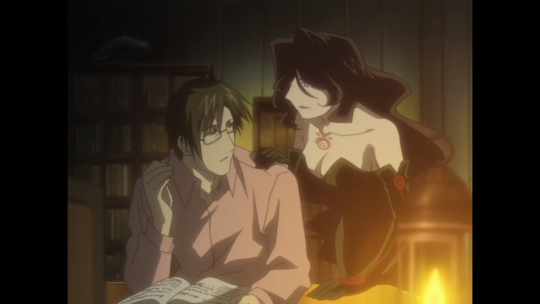
So there’s this episode where she encounters a young man and he falls in love with her. It’s a tragic story because she seems quite unaware of his growing feelings for her and she never intends to hurt him. I love this episode and how it clearly demonstrates her inhumanity, her heartless cruelty that has been prominent up until now in the series, but now its juxtaposed with her own dissatisfaction, her longing for answers and her (so far) unspoken wish of regaining her humanity. 

When Lust walks into his life, the young man, Lujon, is already engaged to be married to a nice girl who desperately cares for him. But he quickly grows close to Lust. His fiancé, Lydia, is growing sick and she’s aware she’s losing Lujon just as she’s aware she’s losing her life.

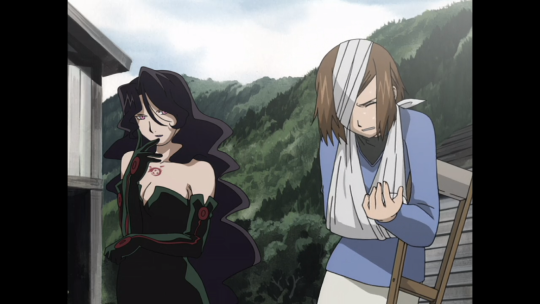
She even confronts Lust about it, though coughing and crippled she nevertheless begs Lust to let her have Lujon. Lust is entirely unaffected. I like the contrast between the two – Lydia is this sweet girl who feels helpless against this exotic beauty. 
image
image

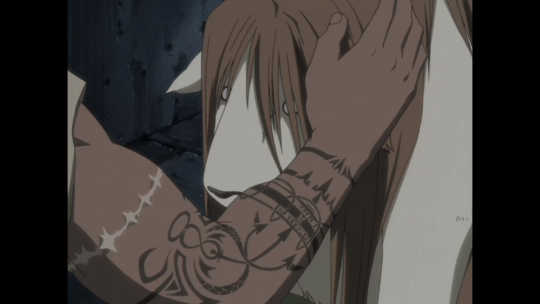
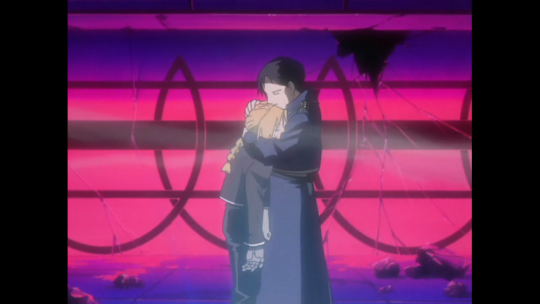
On the day Lydia and Lujon are going to be married, Lujon goes into the woods to see Lust instead. That’s when he attempts to confess his feelings, hugging Lust tightly. (Again you can contrast Lydia in her white dress and white veil – a white wedding dress traditionally indicates purity – with lust in her black.) 

image

I think this is a seemingly very classical example of the sin of Lust. Lust herself isn’t even aware of the turmoil she’s causing but her mere presence has caused these two great pain, leading to heartbreak and separation. Without her in the picture, the two of them would have been happily married. 

And yet, it’s not so simple because Lust is presented in this episode to both be very knowledgeable and yet very naive. She’s shown to know a lot of alchemy and she and Envy are scheming; using this village and this illness they manufactured for their own goals. Yet she also seems unaware that Lujon has fallen for her. Lydia is fully aware of it, hence her earlier confrontation but Lust didn’t seem to get it and when Lujon hugs her, she’s completely surprised and caught off-guard. These feelings are all new to her.

image

As Lujon hugs her, faded memories of being held like this suddenly resurface. In this scenario, she is the sickly, dying girl while her love is a man considering forbidden alchemy to save her. 

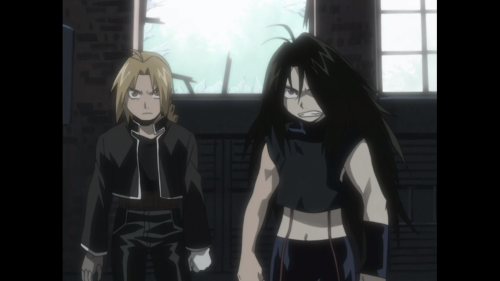
That’s the thing with Lust, she appears to be this perfect immortal creature, the dark destructive beauty bringing ruin. Ed even questions her about it later:
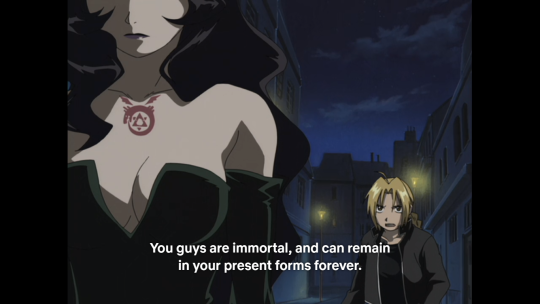
image

But, at her core, she’s more like the sickly dying girl who wants to be truly alive (or is ready to accept death?). Up until this point in the series, Lust has appeared plenty and she’s always been ruthless, cruel and a bit mysterious. This episode show’s more of that, as she and Envy show no remorse at the awful disease they spread and the many lives they’re ruining. But it also shows her wanting to be human. She’s very thoughtful but scared of her feelings as they confuse her.

So after Lujon hugs her, Lust runs away. Two years later, Lydia has come to terms with the way things are. She confesses that as much as she loved Lujon, there was someone else he loved more. But Lust is still feeling lost. 

She is still looking for answers. This episode immediately follows Greed’s demise and her own mortality weighs heavily on her. Upon meeting Lujon again, he is happy to see her. He was sad that she disappeared and regrets that things ended the way they did but confesses that he’s been hoping to find her again.

So, Lujon embraces her again, making his feelings clear. She is startled by the memories once more and still doesn’t know how to deal with them. So she tries to run once more. This time though, she stabs him through the heart and he dies. A dying Lydia stumbles upon his corpse and it seems they are at least together in death. 

Lust is left feeling only bereft as she leaves with Envy. It’s a cruel irony that she has been looking so hard for answers only to be scared once she starts to find them. Not unlike Ed and Al’s own hopeless quest in that regard. She killed Lujon but it doesn’t end the inner turmoil. Her search for answers continues.
Ep 8 – Ed can get really emotional and act irrationally

There’s plenty of emotion in FMA 03, really. It’s why it’s my favourite. I’m talking about episode 8 for now anyway.

So it’s the episode after Nina died and Ed is really distraught about it. And Ed encounters a serial killer! Interestingly, 03 decides to follow the Nina incident with Ed getting into a fight and almost getting killed just like the Manga but decides to hold back on the Scar fight. Events are shuffled around quite a bit really, but plenty of similarities remain.

But one big difference is that Ed wasn’t looking for the Scar fight, he was feeling sad and depressed about what’s just happened and then he’s attacked.

In 03 however?

Ed decides to leave the military (which he just joined) and hunt down the serial killer. 

You can see why. He’s feeling helpless and wants to do something about it. He’s informed that Tucker’s been executed already and he can’t bring Nina back. The only other option open to him is to find who killed her and find some sort of justice for what happened. He needs some sort of obsession to focus on.

And the military is cold and uncaring. They want him to get to work. (And someone has a seriously sick sense of humour in ordering him to go through Tucker’s research.) Mustang is unsympathetic. Even Al just wants to move past the tragedy but Ed just cannot. 

But Ed’s also acting completely irrationally. He heard about a serial killer in Central a little while ago and decides that it must be him behind Nina’s death. Even though it’s so obviously not. This guy goes after young women and likes to slash them up. The cause of death is completely different. But Ed’s basically clinging to whatever cause he can find. 

Al’s trying to be reasonable. He’s like: “We don’t catch criminals, we’re alchemists, we do research. Maybe we can find a way to prevent another Nina from happening.” And Ed literally runs away. So he’s run away not just from the Military but from Al as well. So, Al gets on with research while Ed pursues his pointless mission. 

Ironically enough, Ed actually does run into the culprit by sheer coincidence.

And he has no idea that it’s him and they wander away with no confrontation at all. (Aww, Ed’s so little.) Is he smiling? He hardly smiles at all this episode…

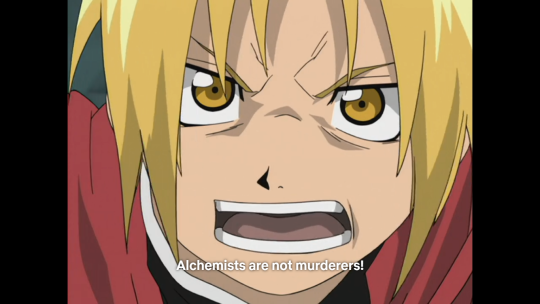
Well Ed still can’t do much alone so he goes to the one person who will help him out: Hughes. He’s kind enough to share his case files with Ed and give him a chance to focus on trying to solve this case. Ed’s still kind of snappish with Hughes and practically blows up when he suggests maybe an alchemist was behind the killings. Ed takes it very personally.

(Sorry Ed, but most alchemists are indeed killers.)

Well, Ed finally gets the fight he’s been after and it’s nothing like he imagined. It’s not him defeating the bad guy – instead his friend is in danger and Ed’s nearly rendered helpless. 

When Al appears, Ed so relieved. He now talks about his feelings, how he felt extremely scared and vulnerable. And he’s crying even as Al comforts him and suggests a new goal in the form of the Philosopher’s Stone. 

Is he starting to be more rational as he works through his feelings, or is it just something new to cling to to stop him from feeling so helpless? Earlier in the episode he dismissed the stone as just a fairytale and only listens now when Al’s just saved him. 

Wrath and Ed and the homunculi’s deaths

image

Wrath and Ed are always paralleling each other in FMA 03. One striking instance of this comes from episode 47: Sealing the Homunculus. We see Wrath turn his arm into a blade to stab Lust, killing her.

image

This is Wrath’s first kill. The method is quite similar to Ed’s kill of Greed. Lust is super sympathetic in these episodes given how she’s allied herself with Ed and everything but from Wrath’s perspective she’s as monstrous as ever with her brutal beat down plus the way she was slicing up Sloth earlier. 

Just like how Greed’s really sympathetic, rebelling against the other homunculi, but from Ed’s perspective he was a monster who had kidnapped his brother and kill a (supposedly) nice old woman. Both fights take place around the same sealing circle as well. (it’s the anti-homunculus one so it’s only logical but I wanted to mention it anyway.)

image

But Wrath’s really quite different from Ed here, he knew exactly what he was doing as he ended her life and only stares at her dissolving corpse impassively. A far cry from how Ed collapses in despair, not having expected to actually kill someone.

But episode 47 also features Ed’s second kill and this time he knew exactly what he was doing. He planned for the scenario in advance and was ready. After it’s over he doesn’t collapse or start crying, mostly keeping hold of his emotions.

Except it wasn’t just Ed who destroyed Sloth – it was Wrath as well. He didn’t intend it but by recklessly fusing with her, he completely paralysed her and left her vulnerable for Ed to destroy. And Wrath collapses in despair and starts sobbing at what’s happened.

image

And here’s Ed after killing Sloth and Wrath after killing Lust. Both kinda sad and contemplative but reasonably composed and both probably questioning life and death and existence etc. 

image

Wow this is a dark analysis. Eh, one final similarity? Lust, Sloth and Greed were all at peace as they were dying:

image

(Yes I think those are all meant to be little peaceful smiles. Wrath is also pretty content with his death in CoS.) …That addition just made this even more depressing, didn’t it? 

Al during Lab 5 arc

The Lab 5 arc in FMA 03 really served to make Al feel really inhuman. I’ve talked about Lab 5 from Ed’s perspective before but it’s a completely different experience for Al. (And somehow just as bad.)

He and his brother have to immediately split up because Al can’t fit inside the vents with his huge armour while Ed can. So he’s forced to wait outside until he gets attacked by another soulbound suit of armour. Except this one is the serial killer that so terrified Ed a few years ago. Definitely the opposite of the kind of person Al is.

Barry the Chopper immediately starts interrogating Al with stuff he’d rather not think about – his general existence and whether his love for his brother is real or artificial. Al worries and becomes distracted but puts it out of his mind for the time being as Scar appears and a way into the Lab is opened. 

All is going fine at first, Alphonse gets Scar to open up a bit about himself and his past. But then, the Homunculi appear. 

Lust is all too happy to confirm that she in inhuman and Gluttony attacks Alphonse. He eats all four of Al’s limbs, rendering him completely immobile. Al has entirely lost the ability to move at all and he already can’t really feel things. He’s completely helpless and must feel like an object, very far from human.

Indeed the homunculi continue to treat him like an object, dragging him around and Lust even sits on top of him. He can only watch as Ed gets beaten up by Envy. And they barely acknowledge anything he says. Al is far from quiet for the remainder of this arc but rarely does anyone pay his words the slightest heed. Not only can Al not move, but he can’t even be heard.

In fact, the only stuff that does get said to him is about how the world is cruel. Also, in one respect and the Homunculi aren’t so different – they both want to be human. It’s another comparison that Al must absolutely hate – probably just as bad as the similarity between him and Barry the Chopper. Meanwhile he’s being used as a bargaining chip to convince his Ed to make the stone.

Ed is particularly bad about speaking to Al in this scene. He is so consumed with his own moral dilemma that he is neglecting to respond to Al at all. You’ve got Al screaming for Ed to stop, not to do anything and Ed shows no reaction to any of Al’s words. Al is at the centre of his thoughts, but he’s thinking of his promise, of Al being human again.

Ed doesn’t go through with it and Scar appears to save them, and then the Military arrives. Ed’s rendered unconscious and they’re both carried out. Al is still all broken up and can do nothing but wait for Ed to wake up before they talk. Although they’ve got out, Al still can’t move at all and all he can do is think. When Ed finally does wake up, neither of them are really talking and Winry has to be called over to fix Ed’s arm. 

When Al wants to get away for a bit, he literally has to call Broche and ask him to move him outside. Perhaps it should come as no surprise that all Al has been doing is stewing over his thoughts and when he’s finally repaired, the first thing he wants to do is to get away after probably multiple of days of being stuck in this completely helpless form. 

He lashes out at his brother when Ed grabs his arm to try and stop him.  

He hadn’t intended to hurt his already injured brother and once again is horrified at his own strength. His next words are instead: “stay back.” Al feels like he is hurting Ed by being close to him and runs away. They do resolve things but first Al has to question his own state of self, asking Scar if he seems human, for instance. 

There’s this one line where Al claims he doesn’t care about Ed, but I think that couldn’t be further from the truth. Truly, Al seems to be struggling to justify his own existence and is seeking validation. He cares enough about Ed that he seems to think that distancing himself might be better. In regards to believing his memories are fake, I feel like it’s a thought that gives him particular horror so he can’t help but dwell on it. But his lack of own self-worth is the real dilemma here and once that continues to be relevant. Later on, Scar will sacrifice himself fro Al’s sake and Al will start wondering whether he’s just cheating death and that he doesn’t deserve to have people repeatedly dying for him. A lot of that is also evident in this arc as well.

03 Ed’s character development

Hello, this post is a bit of me attempting to explain the progression of Ed’s character in 03 and how it shifts slowly over time.

Early on we see Ed (and Al) having adventures, getting into trouble and then solving problems. The Ed we meet here is really confident and happy with lots of big arrogant smiles. He takes great joy in outsmarting people or defeating people with his awesome alchemy skills. He gets moody at times – he doesn’t like being part of the military – but he is proud to be the alchemist for the people.

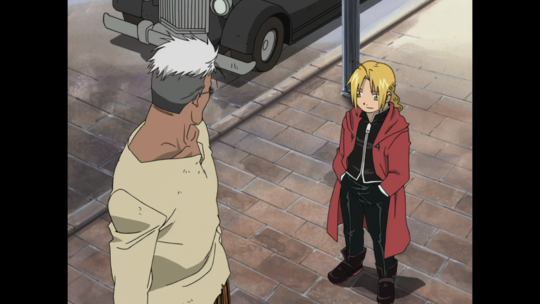
The first glance at him after the timeskip when he’s 15 has him talking to a taxi-driver about his lovely reputation and he’s visibly happy and gloating. (The wind gets taken out of him with a remark about his height though.) Now, he is sensitive to people’s suffering and wants to help others when he can – stuff like Nina still weighs on him and his past is extremely tragic but he prefers to blame the world and get angry and frustrated at the unfairness of it all. But mostly, he’s doing his own thing and thinks he’s awesome. (See Liore, Yousewell and the fullmetal versus flame episode.)

Ed proudly introducing himself.

Al’s a little more humble and caring about others while Ed is less interested in other people’s problems, he’s not exactly cruel but he’s very-much self-interested – he generally wants to help only when he begins to care about them or if it’s really about proving himself. (In episode 10, the Phantom Thief, his problem with Clara wasn’t that she was a thief, it was because she was a thief using alchemy. He’s particularly opposed to the misuse of alchemy and actually helps her when he thinks she’s trying to help the town. Then when she’s tricked him, Ed wants to defeat her because she got the better of him and he hates that.) 

Over the series, this arrogant attitude gets deconstructed. It starts with Marcoh, when Ed tracks him down and doesn’t care too much about his story about his Ishval and how the Stones he made were misused. He just wants the stone for his own goals – restoring him and Al – and doesn’t really care too much about the wider world. Then Marcoh gets taken by the military and Ed suddenly feels bad because he realises his actions caused this and he steps in to defend Marcoh from Scar. Complete with a flashback to Nina. (Separate post on this here)

So next, Ed finds out that the Philosopher’s stone is made from human lives and he starts to give up because pursuing their own goals would mean hurting others. It’s another huge challenge to his worldview. (Here’s a separate post I made on it.)

Then he enters Lab 5 and he finds out the homunculi have been behind things and that they’ve been secretly manipulating him and his brother all this time, leaving a trail to the stone to lure them in. Now Ed can no longer pretend that it’s their own quest independent of anything else. They’ve been controlled all this time and didn’t know it. Tucker is still alive. Barry the chopper is still alive. Ed hates being tricked and outsmarted and he’s really shaken by it all. All his achievements suddenly seem like nothing. (More of my thoughts on Lab 5)

Meanwhile, you’ve got Al interacting with Scar. Originally Scar is just a bad guy to Ed and now they’re learning more about Scar and his sympathetic motivations and it’s not so black and white. In contrast, many of the early villains tended to be framed as generically evil. 

So Ed finds he’s more connected to the world than he’d like to be. He can’t just be selfishly pursuing his own goals with no care for his effect on the world. He learns about how the homunculi were created with Izumi and then he meets Greed. Greed’s just a bad guy to Ed. Then Ed kills him and Greed reveals he let Al go, that he’s been manipulated all his life and that he’s not such a bad guy. It’s not so simple as Greed or Wrath being evil just because they’re homunculi, like the ones they met in Lab 5. And now Ed has to deal with the fact that he’s taken a life, previously a line he swore not to cross, and he has to try and move on. 

Early episodes had Ed really happy and proud with him being the hero defeating the bad guy and saving the day. (Nina, his great failure, and Barry the chopper are sort of exceptions but even then the bad guys were so clearly evil and he could at least take some sort of satisfaction from defeating them. Until lab 5…) These episodes show the opposite, Ed feels terrible for what he’s accomplished. There is no satisfaction here.  

So the next couple episodes have some more of his assumptions challenged. His interactions with Ishvalans in episode 36 reveal that he’s been affected by propaganda more than he’d like and he confronts a bit of his own internalised racism (even if the show doesn’t really delve into the subject.) Ed is starting to rethink his assumptions and his worldview. He makes this nice statement about how you can’t always trust what you’ve been told and you have to come to your own truths about the world. It’s a lesson Ed’s beginning to take to heart. Soon after this, Martel informs him how the Ishval war wasn’t a single inciting incident based on different worldviews but an active insidious campaign by the military from the beginning purely to start a war. What he’s been told before has been more lies and military propaganda which he’d never questioned.

Then the truth about Liore is revealed and Ed is now confronted with the fact that his actions didn’t help like he thought. He couldn’t solve their problems. All he did was cause worse problems even though it wasn’t his intention. All he can do is collapse in horror at the graves, realising that he was never the clever hero defeating the bad guy. His actions really had huge devastating consequences outside himself. 

And while in Liore, he confronts another mistake he’s made. He faces Sloth, who he’d been in denial about for ages, even when he should’ve known. Now he accepts that she’s his creation and his responsibility and he can no longer run from her. So after this, he prepares, going to Risembool to get her weakness. 

Lust has been his enemy for a long time and she’s done some terrible things. Yet she offers to work with him against his enemies. She wants his help and I like her line about how if he gives her what she wants and makes her human then they wouldn’t be enemies anymore. It’s like, these characters are more complex than mere bad guys and helping her would be the best move even though she’s never shown any remorse for the things she’s done. There’s no point to antagonising her now. (I’m probably not explaining it that well but I find this scene really powerful.) Meanwhile, Sloth is intent on being their enemy to the end and it’s necessary to go as far as killing her.

Ed’s fight to defeat her is every bit as clever and awesome as any of his earlier schemes and he’s aiming for the ending he got. (Whereas he was shocked by his own actions against Greed.) But there’s no happiness in victory here. Only bitter sadness. He’s beginning to understand the homunculi and that they’re not monsters – they’re tragedies. 

At this point they have the Philosopher’s stone and Ed could be trying to get his and his brother’s body back. I think it might well have been possible. Early Ed probably would have tried to do just that. But now Ed’s not thinking of his own goals, he’s thinking of the greater world outside of his own dreams. His conversation with Mustang in Episode 48, Goodbye, discusses this. Mustang’s throwing away his dream of becoming Fuhrer to defeat the corrupt Military while Ed goes after the Homunculi’s master who’s been pulling all the strings and starting wars. War is not a far-off thing that doesn’t concern him as he believed in early episodes. 

So we don’t see much of his cocky smile anymore. Ed learns he’s not as clever as he thinks he is and that his enemies aren’t as simple as he once thought and that the world affects him and he affects the world, whether he likes it or not. That’s some of his character development throughout the series. 

We may not get so many big grins but we do still get some nice smiles from him at times. He’s grows more thoughtful about the world and more caring about others. He’s calmer and less arrogant and better at forgiving others for their mistakes, (like he’s able to forgive his father for all the terrible stuff he’s done upon seeing how he’s trying to be better). He’s still restless, and very attached to Al and can’t let go of his principle of equivalency entirely and this leads to his final sacrifice and then continuing researching relentlessly in the new world – he doesn’t become a perfect person or anything but he does grow immensely becoming kinder and more selfless. I absolutely adore his character growth.

Ed’s my favourite character in FMA and I absolutely love his character journey in 03. I hope this helps to explain why.

Scar and Nina

In FMA 03, Scar’s introduced in the same episode as the Nina incident. Interestingly, he’s very unsure about what he’s doing and is looking for a purpose. He’s sitting alone in an alleyway, brooding, when the Nina chimera comes up to him.

His philosopher’s arm identifies her as a human chimera. He’s still confused about why he’s getting such information, questioning what it all means. Seeing what pain she’s in, he decides to destroy the creature, in a sort of mercy kill.

Seeing such an atrocity created by an alchemist actually inspires Scar to start his crusade against State Alchemists, giving him a new purpose. Later exploration of his story show he’s already experienced the cruelty of alchemists in the form of Kimblee and other State alchemists sent to Ishval (plus his brother’s own obsession with alchemy towards the end was incredibly alarming)  but it’s this act in a completely different setting that actually inspires him to act against alchemists as a whole.

I think it’s an interesting early introduction to his character, as it makes his motivation a little more nuanced than mere revenge (which also gets explored). It’ll be several episodes (and a few years storywise because the timeskips.) before we’re properly introduced to him but it’s nice to see some of how his story starts. 

Kimblee and Archer’s dynamic – FMA 03

Kimblee and Archer have a surprisingly really interesting dynamic. It’s strange how these characters just worked, you know?

Okay, so you’ve got Kimblee who was freed from Lab 5 by Greed and is now part of his gang. He seems happy enough to help out, fairly content with his freedom and such. When Greed hears about Wrath being captured by the military, Kimblee volunteers to help break in to the Southern HQ. 

He does so, merrily blowing up soldiers to break in but things go strangely between Izumi, the Elric brothers, Armstrong, other military soldiers and Envy disguised as the Fuhrer. That’s where Archer first sees Kimblee. They aren’t able to grab Wrath but they do successfully escape until Archer calls over to Kimblee to ask about him. Archer offers to make Kimblee a State Alchemist again in return for helping him. 

This shows Archer to be rather cunning. He’s more than the average loyal soldier as he’s devious and knows how to make connections. They could have been natural enemies – one man cold, power-hungry and loyal to the military; the other independent, chaotic, not believing in anything. But Archer judged Kimblee correctly and they adopt a mutually beneficial partnership. 

So, Kimblee decides to betray Greed. He was always prepared to, having secretly gathered the remains of Greed’s skull – his weakness in Lab 5 – just in case. They’ve been together for quite a while at this point and Kimblee does’t make use of it until he agrees to an alliance with Archer though.  

Greed meets his demise, (as does all his chimeras save Martel) due in part to Kimblee’s betrayal. In return for Kimblee’s help, Archer uses his position to get him reinstated into the military. And they have fun with it too. 

Archer and Kimblee very much enjoy telling Mustang and other officers how Kimblee had been “wrongly imprisoned for crimes he did not commit and subjected to illegal experiments in Lab 5 before he heroically escaped and helped to shed further light on Lab 5.” Their story is delightfully false and this seriously angers Mustang but he’s not able to do anything about it. It’s a good example of the Military’s corruption. 

And their alliance continues as Archer pursues his goals in Liore. He wants a victorious campaign in order to rise in the ranks and sends Kimblee in to cause terror in order to provoke the citizens into attacking to justify their aggressive tactics. This does not go well for either of them. Kimblee dies and Archer is gravely wounded to be turned into a machine for the military. 

(Yeah the ‘Terminarcher’ annoys me too. He’s honestly far more intimidating as just a regular person who uses the system to his advantage. That said his screentime is brief and I enjoy seeing Riza so easily defeat him.)

A comparison between 03 and BH Alphonse

Hey, I got an ask requesting my thoughts on the similarities and differences between Alphonse in the two anime adaptations. Here’s my response:

Alphonse isn’t all that different in each series, as I believe the manga gives a good look at his personality in early chapters so it’s not radically different like your Lusts and Kimblees etc. He’s still the more polite younger brother who’s nice and loves cats and is great at alchemy. 

The biggest difference for me is how I feel 03 Alphonse can be a lot more emotional and extreme with his reactions. Like 03!Ed, he’s very good at feeling guilty. He blames himself for the human transmutation, insisting on shouldering as much as the blame as Ed and becomes very enraged at the existence of Wrath who has his brothers missing limbs. He also wants to give Sloth a chance because she’s their creation and he feels responsible for her. (Ed takes being responsible for her in the opposite direction.) Becoming the Philosopher’s stone near the end of the series gives him this survivor’s complex as he thinks of all the people who have sacrificed themselves for his sake. He thinks of Ed in the human transmutation, Scar in Liore and Martel (he probably feels quite guilty for failing to save her after trying so hard to.) 

His identity crisis from Lab 5 is given greater focus, showing how he struggles with the question of his own humanity – a big theme in 03 – and shows how he’s driven by his emotions a lot more than reason. He can be quite irrational and often lashes out at his brother. That said, I feel he values his brother’s life more than his own; he struggles with the value of his own existence. (And Ed values Al more than his own life because they’re both self-sacrificing idiots.) He also willing to extend trust to almost anyone, leading to his friendship with Scar even after Scar try to kill him and his brother.

BH Alphonse, I think has many of these traits to some degree but they’re not developed in nearly the same way. Al also feels that no one should die for him to get his body back and will mournfully note all that everyone has given for his sake. But it’s more that he doesn’t believe anyone should die for him because human life is valuable and he and his brother want to complete their quest without sacrificing a life. (03 Ed and Al were not nearly so optimistic.) I get less of a sense that he doesn’t value his own existence and more that he believes there is a better way. At the end where he sacrifices himself for Ed, he doesn’t seem even slightly uncertain that Ed will save him so it’s harder to see it as the heroic sacrifice that it is if Al does not feel like he’s giving up his life. 

BH Al is also the voice of reason compared to his reckless older brother where 03 would turn the dynamic on its head quite frequently. In BH, Alphonse is the sensible one where Ed is the hothead. There’s no character like 03!Wrath to bring out the darker side to him. He’s in many respects the gallant hero that Mei was looking for as he’s brave, resourceful, respectful and kind.  

I’ve been doing a little rewatch of BH and Al’s frequently present and doing stuff but I find I hardly ever actually mention him. I frequently have nothing to comment about him, neither good or bad. He’s just there. 03 Alphonse meanwhile is so much more emotional and so often challenged by the often pretty terrible people he’s always interacting with.

I feel that BH Al is an unambiguous hero who always knows to do the right thing where 03 Al is an extremely caring individual who tries his best for others but sometimes fails and sometimes handles situations badly and whose feelings of guilt can sometimes lead him to lashing out. 

Sorry if I don’t sound so fond of BH. I’ve only watched it 1 and a half times and don’t like it nearly so much so I might be getting BH Al’s character a little wrong. 

A comparison between 03 and BH Riza

Hey, I got an ask requesting I give my thoughts on the differences between Riza Hawkeye in 03 and Brotherhood. Here’s my response.

To talk about Riza, I first have to talk a little about Mustang. Mustang is portrayed quite differently in each series. In Brotherhood, Mustang is a hero that gets tempted but ultimately manages to overcome and help save the day. In 03, Mustang is a person who wants to be a better person but is haunted by his past and yet does the right thing in the end to become a hero. That’s how I see them at least.

It is quite emphasised in 03 that Mustang has done awful things and even in the present he still struggles with being a good person. He’s kind of a manipulative bastard and is defined by the military he’s a part of. He wants to change it in order to help justify his past and he finally does so by abandoning his dreams of power to kill the Fuhrer. He’s quite distant with Ed and Al for much of the series.

BH Mustang is nicer, he’s always fighting for the right side and wants to do good and he cares for his men and for the Elrics. He does nearly become obsessed with revenge but overcomes that. His trauma over Ishval is less explored though it does partially explain his motivations. Still we never see him kill children, or doctors or use his flames to control a group of refugees who hate the military.

Yet Riza is completely loyal to Mustang in both versions. 03 Riza in not explored in much detail but what we do see of her is a faithful soldier who is always supporting Mustang, no matter what he is doing. She truly believes in him and his mission. When speaking with Winry, she confesses that she does hate the military but joined in order to protect Mustang – it is the choice she has made.She knows what he’s done in Ishval but stays with him anyway. We hear nothing of her own past. Given how much she knows of it, it is reasonable to assume she was in ishval as well but even that isn’t confirmed. She seems fairly clever and reasonable and we rarely ever see her break composure.

I should note, I’m reading into her character quite a lot to get such an interpretation. She’s not explored much at all. She’s merely a constant presence at Mustang’s side. I like her well enough, her personality as a strict, reasonable woman works well amidst some of the zanier soldier personalities but she’s not nearly so much of a major character. I don’t know about positive and negatives, she’s reasonably likeable but underdeveloped when she could have had an arc. She’s a pretty static character.

BH Riza gets a ton more development. We honestly explore Ishval more from her point of view than Mustang’s, looking into her own actions in taking lives in a war. That conversation with Kimblee where he suggests she takes pride in her actions over killing rings very true and seems to scare her.

We explore her family a little, how her father was a cruel person who tattooed dangerous knowledge onto her back. It’s pretty awful and yet she also seems to, in some ways, still respect her father; clearly the relationship was a complicated one. Mustang’s learning of Flame alchemy was directly linked to her and her father and she holds herself a little responsible for it. Her back is burned so the secrets of the incredibly destructive alchemy can die.

Her loyalty to Mustang is less questionable here as he’s more heroic, as I noted earlier. She’s also very willing to challenge him over his heroic actions, criticising him whenever he goes out of his way to save her.

There is this element of her character that I’m not quite so fond of where she is prepared to die if Mustang is dead, she can’t live without him. She completely loses composure when fighting Lust while Alphonse is encouraging her to keep on fighting because she thinks he’s dead. Against Envy she threatens to kill Mustang and then herself if he goes through with killing Envy. She might be saying that just to get him to stop and think but it’s frightfully similar to the battle with Lust.

Now, this is sort of interesting but I feel like it’s not something that should be portrayed romantically and I kind of just dislike how she’s such a strong person who can live with many things and evils such as her actions in Ishval, yet she can’t live without him. It gives their relationship this sort of unhealthy feel which I’d appreciate exploring but not in an idealistic romantic way.

The fight with Lust somewhat reminds me of the 03 fight with the Fuhrer in the last episode. In both of those we see Riza show her vulnerability but in 03 it’s practically the first time and well-earned after 51 episodes and Mustang is literally bleeding out, very close to death and she also just killed the person attacking him, in BH it’s only episode 19 and she hasn’t seen Mustang and Lust is still there threatening her while its Alphonse staying strong and Mustang saves her.

That said, Riza’s relationship with Mustang is well-explored in BH, we see how close they are and how they understand each other with all their coded messages and how Riza is used against him and there’s like that whole scene where Mustang refuses to perform human transmutation and also at the end where Riza’s guiding a blinded Mustang.

I won’t go on any further, others have talked plenty about BH Riza and Mustang. Suffice to say, there’s a lot of them. She’s a far more major character than 03 Riza and I don’t like every part of her character development but she certainly gets far more of it. I have no problems with 03 Riza but there’s just less of her.

Maris Ross in 03

Maria Ross is lovely. She’s introduced in Episode 18, which is while Ed’s studying Marcoh’s notes and she immediately gets into conflict with him. She sees Ed’s complete lack of concern for his own safety to be an issue when she’s been tasked with protecting him. 

But it’s not just her job that compels her to care for the Elric brothers. She sees them as lost children getting in over their heads and needing someone to look after them. And she’s fully prepared to step into the role herself – whether Ed likes it or not.

Throughout this episode, she and Ed conflict with each other, Ross gets irritated at his impulsiveness and gets angry when he insists on working in the library where she isn’t able to provide him proper protection. Ed refuses to listen to her and he’s not obliged to (due to his rank as State Alchemist). He’s been dismissing her and Denny Broche repeatedly and very much sees bodyguards as another hindrance to his goals – another thing forced on him. (Ed sees the Military as a necessary evil.)

 So, Maria talks to Hughes about it instead. And nice as Hughes might be towards Ed, consistently helping him where others wouldn’t, Hughes takes Ross’s side in their argument. 

Hughes is often bending the rules for Ed and Al, he told them about how Scar killed Nina, offered him case files when Ed was investigating Barry, and helped him fight the terrorists on the train. Ed was fully expecting Hughes to be on his side. And Hughes knows it too – he doesn’t like denying them. But he cares about their safety too and recognises that Maria Ross cares.

Ross inquires about why Hughes would let them chase after the Philosopher’s stone at all and Hughes offers some nice insight. Ed and Al would chase after it regardless of whether he let them or not. By helping them, he is able to better protect them and, uniquely among the military, has Ed and Al’s trust. (Because Ed certainly doesn’t trust Mustang at this point in the series.) 

Additionally, Hughes says that the State’s future is in their hands. That he and Ross have a duty to enable them to research into the Philosopher’s stone. Clearly, Hughes recognises the importance of their quest and is already looking into the bigger picture. Looking into it further is dangerous, as Hughes will soon learn though. Ross doesn’t like this but accepts it. From here, she’s more actively supporting their endeavours.

In the next episode, the Truth behind Truths, Ed has found out the secret of the Philosopher’s stone and wants to just give up. It’s practically what Ross was aiming for an episode ago but now she actively encourages him to continue searching, citing the importance of it, how it goes beyond their own personal goals.  

Like, Ed wanted to make a stone to save his brother but after learning the cost, he realises he can’t go through with this any more. But he’s also finding out a lot about the military’s corruption and how the stone has been used in Ishval. There is more to look into, namely Lab 5 and what lies at the heart of this conspiracy. Ross encourages Ed to continue looking even if they themselves won’t gain anything from it because there is more to learn. He can’t let himself be turned away because he doesn’t like the answers he’s getting. Ross recognises he’s scared and still essentially a child, but encourages him anyway. It’s a great scene.

When Ed finds his determination once more, Ross gives this smile, like she’s proud of them.

‘Course Ed and Al still don’t trust her fully yet, though he did share his conclusions concerning Lab 5 with her. Ross promised to use the military to look into it but Ed and Al decide to sneak out. 

I try not to bring up BH too much in comparison so… sorry. But the two different responses from their respective Maria Ross’s highlight their differences. When BH Broche and Ross discover the boys have snuck out, they’re comically worried and don’t want anyone to find out they lost track of the boys as it might get them into trouble. They’re concerned about the Elrics too, yes, but also themselves. 

Maria Ross in 03, meanwhile, looks betrayed to find they’ve snuck out and informs Hughes. He agrees to authorise a military sweep of the abandoned Laboratory, getting a bunch of other soldiers, including Armstrong involved even though it’s the middle of the night. Fuhrer Bradley actually runs into them and goes along with it (likely realising it would be too suspicious to deny their operation.) 

Upon entering Lab 5, Ross finds Ed in the red room and bravely wades into the room to calm him down. He had absorbed incomplete stone material and was in great danger of some sort of alchemic backlash as he was unable to control all that energy. Even Armstrong seemed to think it was too dangerous to go near him. Maria Ross calms him with a motherly hug, likely the first Ed had received in a long time. 

In the aftermath of Lab 5, Ross confronts Ed, slapping him when he tries to brush the whole incident off. She asks him to try and start trusting adults more and he agrees, apologising for some of his reckless behaviour. It’s a good start to an episode about opening up emotionally. 

Ed and Al leave for Dublith so Ross doesn’t show up much more for a while. In Episode 38, she spots Winry and Sheska eavesdropping in Central and helps them out against Sloth, where they reveal some of what they’re learning to them. Ross is quite observant to have noticed Winry there and this nicely leads into Ross’s next significant appearance.

When she hears Ed and Al are on the run from the military, she and Broche decide to have an abrupt ‘vacation’ in Risembool. She tells Winry and Sheska how Ed and Al are wanted by the military and how she doesn’t believe it. Here we see Ross actively going against the military she’s a part of. 

And then again, when she hears news that Ed and Al have been arrested by the military, she goes to break them out. That’s direct action against the military. It’s really the Tringham brothers she ends up saving but they run into Ed and Izumi again anyway and Maria ends up actively fighting against Archer, who pretty much represents some of the worst of the Military while she’s basically become a rebel.

The epilogue shows her working in the new Government now that the Military state has been overthrown. She seems fairly busy so there’s a lot being done. She’s clearly doing the best for the State’s future.

So, all in all, Maria Ross is a character who has the Elric brother’s best interests at heart. She’s a part of the military but she’s nice and goes beyond her duty for them. She represents the best parts of it – the good people working within it who care and want to protect others. Unlike everyone else, she still sees the Elrics as children and tries to encourage Edward to trust her. 

She is very principled and when she disagrees with something she will not stand for it. She does not let Edward get away with whatever he wants, she’s ready to question Hughes and she’s ready to question the Military too. Ultimately, her intentions are good and it’s a greatly encouraging sign to see her and Broche and Sheska working in the reformed State.